





Artificial Intelligence (AI) is rapidly transforming the global digital infrastructure. From large language models to AI-powered cloud service, the demand for computing power and data processing has increased dramatically. As a result, data center and fiber optic network are undergoing a major evolution.
For network operator, hyperscale cloud provider, and enterprise data center, the rise of AI is not only increasing traffic volumes but also changing the way data center network are designed. This article explore how AI is shaping new requirement for fiber optic technology, high-speed optical module, and data center cabling infrastructure, and what organizations should do to prepare for the future.
The Impact of AI on Data Center Network Traffic
AI workload are fundamentally different from traditional cloud computing workload. Training large AI models require
AI workload are fundamentally different from traditional cloud computing workload. Training large AI models require massive parallel computing cluster, often consisting of thousands or even tens of thousands of GPU.
These GPU clusters must continuously exchange large amounts of data, which leads to:
● Explosive growth in east-west traffic inside data centers
● Higher bandwidth requirements between servers and switches
● Ultra-low latency communication needs
● Increased demand for high-density fiber connectivity
In AI data center, network performance directly affects training efficiency. This is why high-speed optical interconnects and advanced fiber optic infrastructure are becoming critical.
Key Requirements AI Places on Fiber Optic Technology
1. Transition to Ultra-High-Speed Optical Networks (400G, 800G, and Beyond)
One of the most significant trends driven by AI is the migration toward higher-speed optical network.
Traditional data center speed:
● 25G
● 40G
● 100G
Current and emerging AI data center speed:
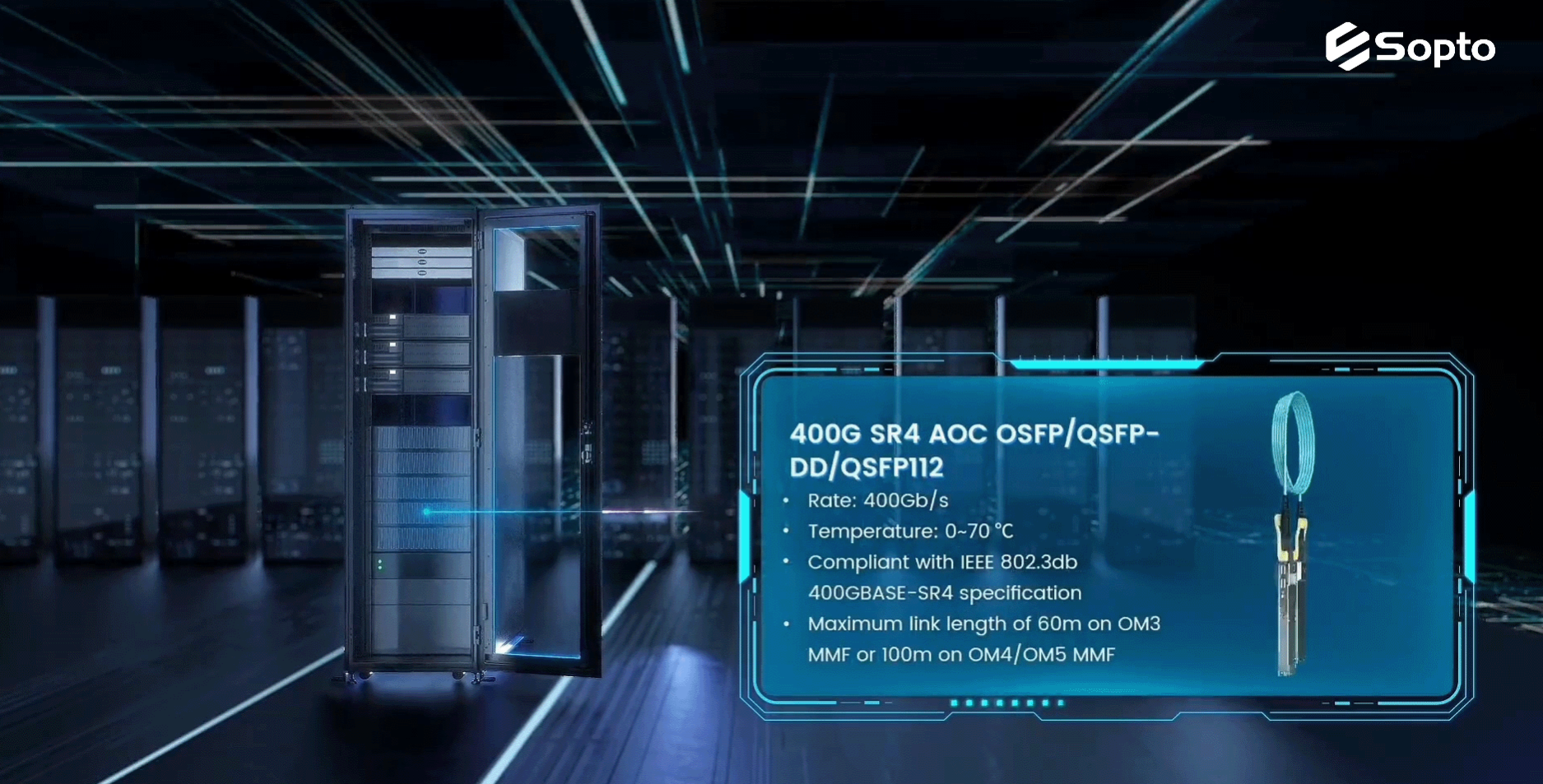
● 400G Ethernet
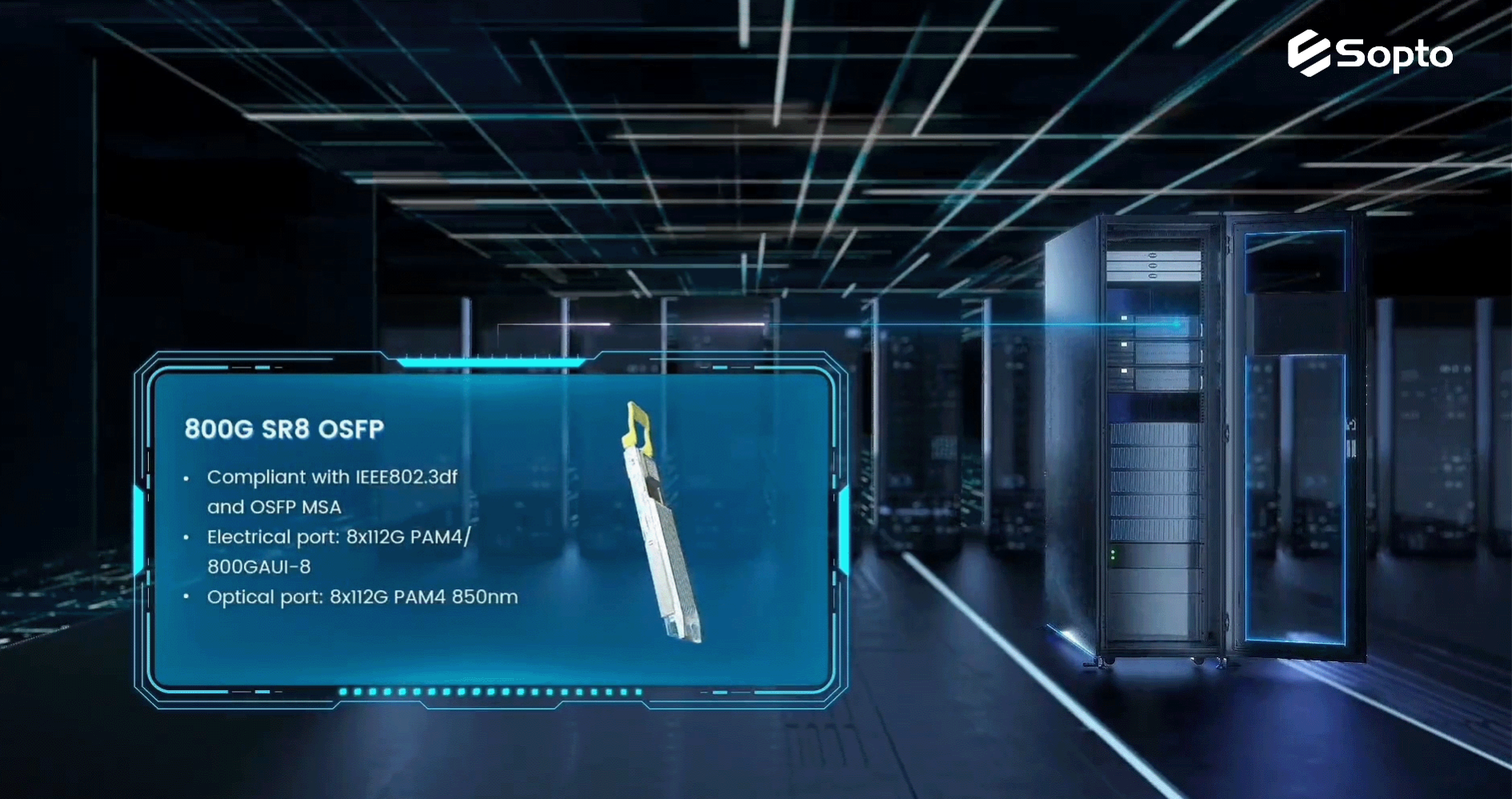
● 800G Ethernet
● 1.6T Optical Interconnects (next generation)
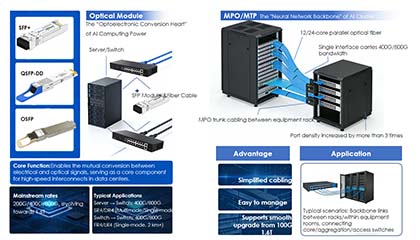
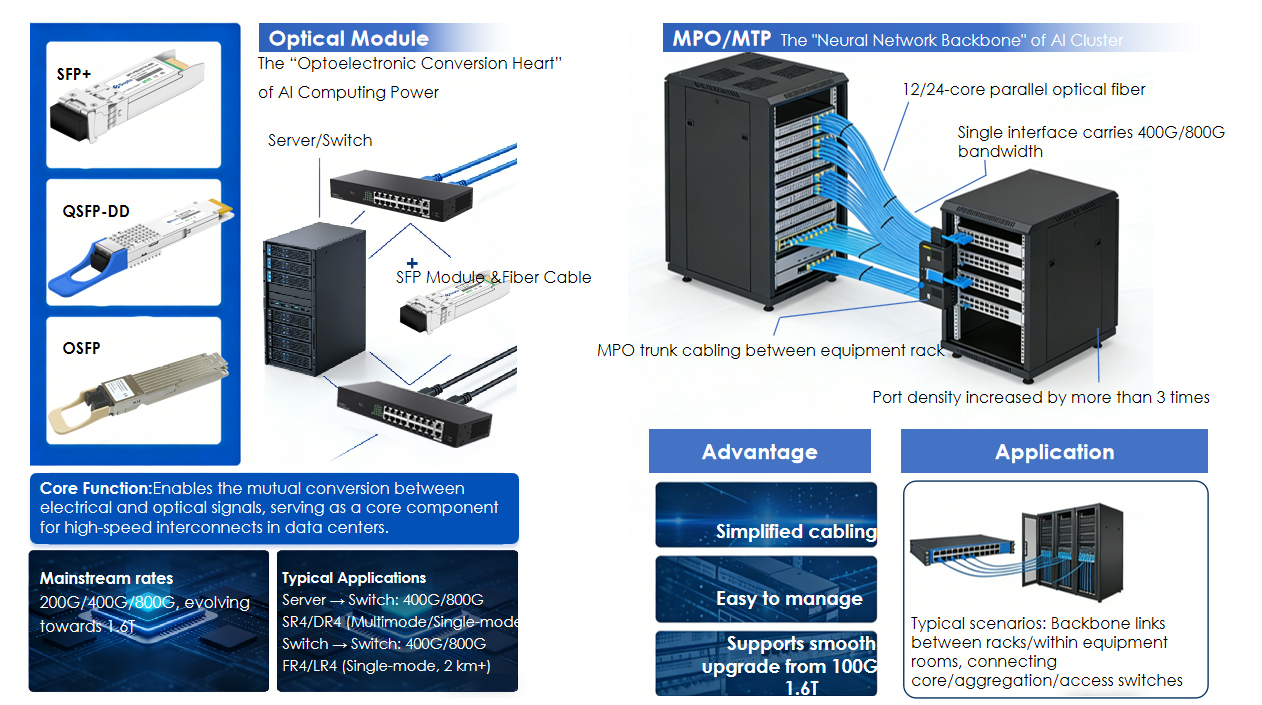
These upgrades require advanced optical modules such as:
● 400G DR4 / FR4
● 800G DR8
● 800G 2×DR4
● Future 1.6T optical module
As AI clusters scale, high-bandwidth optical modules and fiber links are becoming essential to ensure network scalability.
2. Rapid Growth in Fiber Density Inside Data Center
AI infrastructure significantly increases the number of optical connections within a data center.
Compared with traditional environments, AI data centers require:
● More GPU-to-GPU interconnections
● Higher switch port density
● Large-scale spine-leaf architectures
● Massive fiber counts per rack
In many modern AI data centers, a single rack may require hundreds or even thousands of fiber connections.
To support this demand, operators are deploying:
● High-density MPO/MTP cabling systems
● Pre-terminated fiber trunk cables
● High-density patch panels
● Structured fiber management solutions
High-density fiber systems help simplify deployment and improve scalability for AI cluster.
3. Shift from Multimode Fiber to Single Mode Fiber
For many years, multimode fiber (OM3 and OM4) dominated short-distance data center connectivity. However, the rise of AI workloads is accelerating the transition toward single mode fiber (SMF).
This shift is driven by several factors:
Longer transmission distances
AI clusters are becoming larger and often span multiple halls or building.
Higher data rates
800G and future 1.6T technologies are better suited for single mode fiber.
Better long-term scalability
Single mode fiber provides a future-proof infrastructure.
As a result, many hyperscale and AI-focused data centers are increasingly standardizing on single mode fiber cabling systems.
4. Lower Latency and Higher Network Efficiency
AI training performance is highly sensitive to network latency and throughput. Even small delays between GPU nodes can significantly affect model training time.
This has led to new network design approaches such as:
● AI-optimized data center fabrics
● Non-blocking network architectures
● High-radix switches
● RDMA-based networking (RoCE or InfiniBand)
From a fiber infrastructure perspective, this means:
● Shorter and optimized cabling paths
● Low insertion loss optical links
● High-quality fiber optic components
● High-performance optical transceivers
Reliable fiber optic connectivity plays a critical role in maintaining consistent AI workload performance.
5. Power Consumption and Thermal Challenges
Another important challenge in AI data centers is the dramatic increase in power consumption.
High-performance AI switches and GPUs generate significant heat, which impacts optical networking equipment as well.
To address this issue, the industry is exploring new optical technologies, including:
Linear Pluggable Optics (LPO)
Co-Packaged Optics (CPO)
These innovations aim to:
● Reduce power consumption
● Improve bandwidth density
● Minimize signal loss
● Enhance overall system efficiency
CPO, in particular, is expected to play an important role in future AI data center architectures.
How to Build a Future-Ready Fiber Infrastructure for AI Data Centers
As AI continues to grow, organizations must rethink how they design their data center networks. A scalable and well-planned fiber optic infrastructure is essential.
Deploy Scalable Structured Cabling System
Pre-terminated fiber solutions are increasingly popular for AI environments because they offer:
● Faster deployment
● Reduced installation errors
● Lower operational costs
● Easy upgrades to higher speeds
A typical scalable architecture includes:
● MTP trunk cables
● High-density fiber distribution panels
● Modular fiber cassette systems
● Breakout connectivity for high-speed optics
This design supports smooth upgrades from 400G to 800G and eventually 1.6T network.
Implement High-Density Fiber Management
AI data centers require advanced cable management systems to handle large volumes of fiber connections.
Best practices include:
● High-density fiber enclosures
● Organized cable routing systems
● Clear labeling and identification
● Intelligent infrastructure management
Efficient fiber management reduces maintenance complexity and improves network reliability.
Select the Right Optical Modules for AI Cluster
Different parts of an AI data center may require different optical solutions.
Inside GPU clusters:
● 400G DR4
● 800G DR8
Data center interconnect:
● 400G FR4
● 800G FR4
Long-distance connectivity:
● Coherent optics such as ZR or ZR+
Choosing the right optical modules helps optimize both performance and cost efficiency.
Future Trends of AI Data Centers and Optical Networking
Over the next five years, AI will continue to reshape the data center industry. Several major trends are already emerging:
1. Explosive demand for 800G and 1.6T optical modules
2. Rapid growth in high-density fiber optic cabling
3. Increasing adoption of single mode fiber infrastructure
4. Development of AI-optimized data center architectures
5. Integration of advanced optical technologies like CPO
6. Expansion of hyperscale AI data centers worldwide
For network providers and data center operators, investing in the right fiber optic solutions and optical networking technologies today will be crucial for supporting the next generation of AI-driven applications.
Tags : AI data center, fiber optic infrastructure, AI network architecture, 800G optical module, data center cabling solution
— END —