










If you work in network maintenance, weak current engineering, security surveillance, or campus network upgrading, you may often wonder: what is the difference between a fiber media converter and an fiber optical transceiver? Which one is better for long-distance fiber network transmission?
Many network beginners and on-site engineers believe these two devices deliver the same photoelectric conversion function and can be used interchangeably. However, improper device selection is one of the top causes of common network issues, including connection failure, frequent packet loss, unstable network speed, and intermittent disconnections. Picking the wrong device not only delays project construction and increases unnecessary costs but also brings hidden stability risks to the entire network system in the long run.
Whether you are a new technician or a senior network engineer, you can easily avoid selection mistakes and project pitfalls after reading.
1. Core Essential Difference: Finished Device vs Network Component
Without complicated technical parameters, the most fundamental difference can be defined clearly in one sentence:
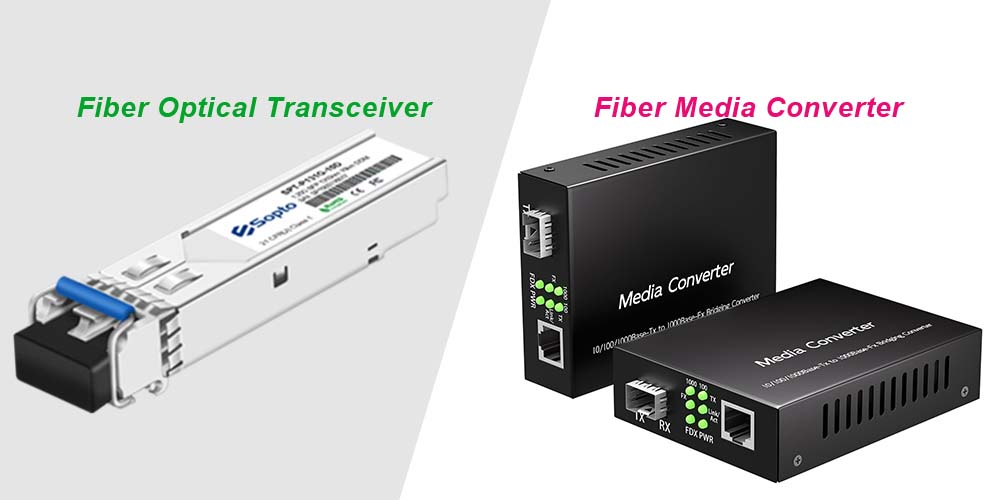
An fiber optical transceiver is a detachable core network component, while a fiber media converter (fiber media converter) is a complete standalone network device.
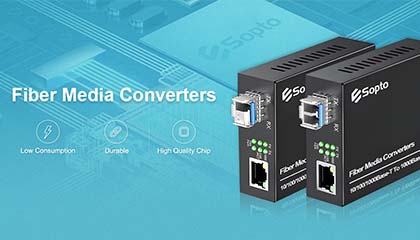
In layman’s terms, an fiber optical transceiver acts as the core signal conversion unit for network devices. It cannot work independently and must be inserted into compatible switches, routers, or OLT equipment to operate normally. On the contrary, a fiber media converter is an all-in-one finished device equipped with a complete shell, independent power adapter, and built-in circuit system. It supports plug-and-play operation and works immediately after simple wiring and power connection.
This is why a single fiber optical transceiver cannot run alone, while fiber media converters are commonly used in pairs to complete independent photoelectric signal conversion for long-distance network transmission.
2. Structural Form: Hot-Pluggable Component vs Integrated Standalone Device
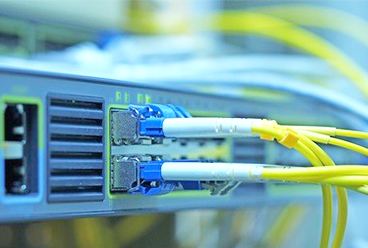
Fiber Optical Transceiver: It refers to mainstream hot-pluggable network modules such as SFP, SFP+, and QSFP. With a compact metal body, it is only equipped with gold fingers and fiber ports. There is no independent power interface, RJ45 Ethernet port, or outer shell. To function, it must be plugged into the dedicated SFP/QSFP slot of host devices including network switches, routers, and OLTs, and powered and driven by the host equipment.
Fiber Media Converter (Fiber Media Converter): It is a fully integrated and independent network device. It comes with a complete protective shell, dedicated power adapter, standard RJ45 Ethernet port, and fiber port. Its internal core component is exactly an fiber optical transceiver, matched with professional circuit boards and independent power supply systems. It requires no supporting host equipment and can work independently by connecting Ethernet cables and fiber cables after power-on.
3. Working Logic: Host-Dependent Operation vs Independent Plug-and-Play
Fiber Optical Transceiver: It features a single, high-precision working function, dedicated to low-loss photoelectric signal conversion. All power supply, signal processing, and data transmission work relies entirely on host devices such as enterprise switches and firewalls. It is specially designed for standardized, neat, and high-performance computer room networking scenarios.
Fiber Media Converter: It integrates power supply, circuit signal processing, and photoelectric conversion functions into one device. It features ultra-simple deployment and full plug-and-play performance. The core function is to upgrade ordinary electrical port network equipment to support fiber transmission, converting Ethernet electrical signals to optical signals to realize stable long-distance network transmission.
4. Application Scenarios: High-End Data Center Networking vs Ordinary On-Site Engineering
● Fiber Optical Transceiver Main Application Scenarios
Optical modules are the preferred solution for enterprise computer rooms, data centers, and core backbone network construction, applicable to all switches and routers with reserved SFP optical slots.
This networking solution boasts neat wiring, low space occupation, ultra-low network latency, and stable long-term operation. It supports full-speed network transmission from Gigabit, 10G, 25G to 40G and 100G, perfectly meeting high-bandwidth and high-concurrency network operation demands. It is currently the mainstream standard solution for professional data center and enterprise core network deployment.
● Fiber Media Converter Main Application Scenarios
Fiber transceivers are widely adopted in security surveillance systems, community network construction, campus building wiring, and old network renovation projects.
Most ordinary industrial switches and NVR recorders used in on-site engineering only retain RJ45 electrical ports without optical ports. Replacing a large number of high-end optical port switches merely for fiber access will cause huge cost waste. A matched pair of fiber media converters can easily realize Ethernet-to-fiber conversion, solving long-distance transmission and electromagnetic anti-interference problems at a low cost, which is the most cost-effective choice for small and medium-sized weak current engineering projects.
5. Speed & Stability: High-Performance Networking vs Daily Practical Use
Optical modules cover a complete high-speed rate range, including common Gigabit, 10G and high-end 25G, 100G specifications. With accurate signal transmission and strong anti-interference ability, they maintain stable operation all year round with almost zero packet loss and ultra-low latency, fully adapting to high-standard scenarios such as enterprise high-end office networks, large-scale data transmission, and core backbone networking.
Fiber transceivers focus on cost performance and basic practical performance. Most mainstream products are 100M and Gigabit models, with only a small number of 10G versions available. They cannot support 25G or higher ultra-high-speed transmission services. They are competent for conventional monitoring transmission and basic office networking but not applicable for core high-speed network environments.
6. Practical Network Selection Guide: Choose the Right Device for Different Scenarios
● When to Choose Fiber Optical Transceivers
Building core computer room networks, backbone networks, and OLT networking systems
Meeting 10G and above high-speed, large-bandwidth network transmission requirements
Pursuing standardized wiring, ultra-stable network performance, and easy daily maintenance
Constructing data centers and enterprise-level core network architectures
● When to Choose Fiber Media Converters
Using ordinary switches or NVR recorders with only RJ45 electrical ports (no optical ports)
Cost-sensitive projects such as monitoring sites, campus networks, and old network upgrades
Only requiring 100M/Gigabit basic network transmission without high-speed demands
Short and medium-term engineering projects requiring low cost and fast deployment
7. Common Engineering Misconceptions & Key Notes
1. Standard fiber fiber optical transceivers cannot connect to Ethernet cables directly. Common fiber optical transceivers only support fiber signal transmission. For electrical port network connection, you need to equip a dedicated SFP RJ45 copper module.
2. Never use fiber media converters for high-speed core networking. For 10G and above backbone networks, fiber media converters cannot meet professional stability and speed standards, easily causing continuous packet loss and network disconnection. High-spec fiber optical transceivers are mandatory for high-speed scenarios.
3. Parameter matching at both ends is essential. For both fiber optical transceivers and fiber media converters, the transmission rate and working wavelength of peer devices must be consistent. Mismatched parameters will directly lead to network failure and frequent abnormal packet loss.
To sum up, the selection rule is simple and clear: adopt fiber optical transceivers for enterprise computer rooms and high-speed backbone network construction; choose fiber media converters for ordinary weak current projects, security monitoring networking, and old network renovation that require Ethernet-to-fiber signal conversion.
Reasonable device selection not only guarantees long-term stable operation of the network system but also effectively controls project costs. Mastering the differences between fiber media converters and fiber optical transceivers helps network engineers avoid most common network failures and selection errors in daily construction, operation and maintenance.
Tags : SFP fiber optical transceiver, fiber media converter
— END —